
How to Choose a Wig During Medical Hair Loss | 5 Comfort Standards for Chemotherapy & Hair Loss Patients

Questions such as "Can you wear a wig during chemotherapy?", "What wig is best for a sensitive scalp?", and "How do you choose a wig during medical hair loss?" are among the most common concerns people have during this journey.
While some shoppers specifically search for "medical wigs," many discover that high-quality fashion wigs with breathable, lightweight, and comfortable construction can also meet their needs during periods of hair loss.
At WigStyleHub, we offer a wide selection of premium human hair wigs and high-quality synthetic wigs. While our products are not medical devices, many feature breathable cap constructions, lightweight designs, and natural appearances that can be suitable for individuals experiencing temporary or long-term hair loss.
This guide will help you understand what to look for when choosing a wig during medical hair loss and how to identify comfortable options among regular fashion wigs.

3 Key Factors to Consider When Wearing a Wig During Medical Hair Loss
1. Scalp Sensitivity
Chemotherapy and certain hair loss treatments can make the scalp more delicate than usual.
Common symptoms include:
Redness
Itching
Tenderness
Increased sensitivity to friction
Excessive sweating
For this reason, the wig cap construction is often more important than the hairstyle itself.
2. Wig Weight
Many people assume that thicker wigs always look more realistic. However, during periods of medical hair loss, lighter wigs are often more comfortable.
General guidelines:
Lightweight daily wigs: 120–180 grams
Long layered or curly wigs: 180–250 grams
Wigs over 300 grams may create additional pressure on the scalp
A lighter wig can significantly improve all-day comfort.
3. Long-Term Wearing Comfort
Many wig wearers need a wig for work, social events, or daily activities.
Suggested wearing schedule:
First-time users: 2–4 hours
After adjustment: 6–8 hours
Allow at least 30 minutes of scalp rest each day
Comfort should always take priority over volume or styling complexity.
5 Standards for Choosing a Medical-Friendly Wig from Regular Fashion Wigs
1. Prioritize Breathable Wig Caps
When people search for breathable wigs, what they truly need is a cap construction that allows airflow.
Look for:
Lace Front Wigs
Mono Top Wigs
Hand-Tied Wigs
Lightweight open-wefted designs
Better ventilation can help reduce heat buildup and improve comfort.
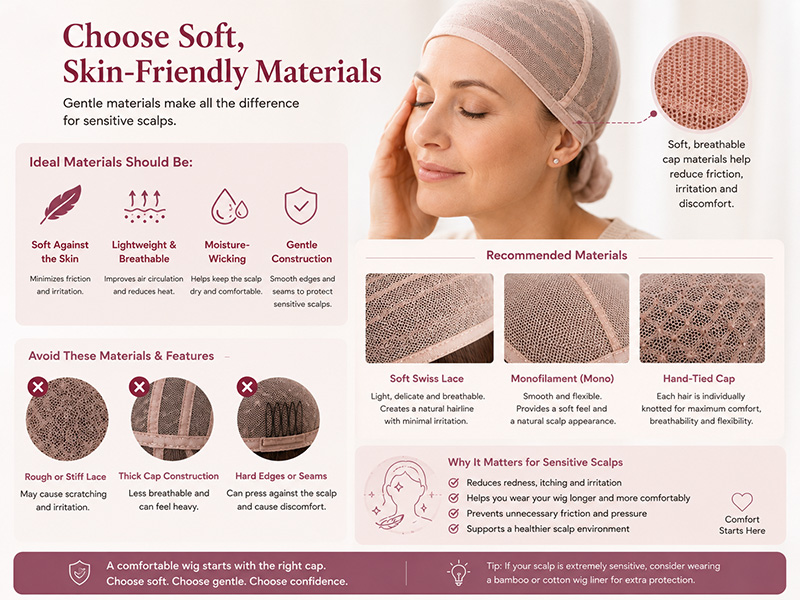
2. Choose Soft, Skin-Friendly Materials
If you have a sensitive scalp, cap materials matter.
Ideal wig caps should be:
Soft against the skin
Lightweight
Moisture-managing
Free from rough seams
Avoid:
Stiff lace materials
Heavy cap structures
Irritating edges or stitching
3. Select Adjustable Cap Sizes
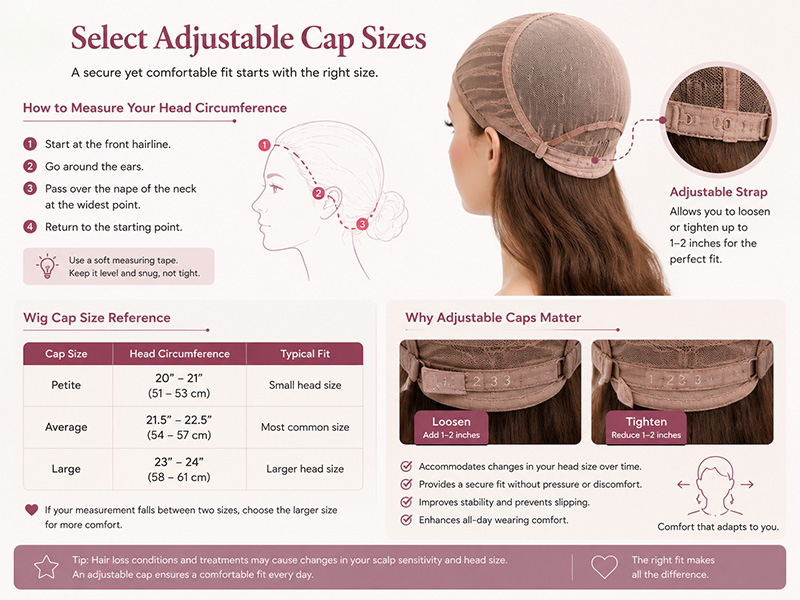
Hair loss can change how a wig fits over time.
To measure head circumference:
Start at the front hairline.
Go around the ears.
Pass over the nape of the neck.
Return to the starting point.
Average adult sizing:
Petite: 20–21 inches (51–53 cm)
Average: 21.5–22.5 inches (54–57 cm)
Large: 23–24 inches (58–61 cm)
Adjustable straps can help achieve a secure yet comfortable fit.
4. Choose Natural Hair Density
Many first-time wig buyers assume that thicker hair looks better.
In reality:
120–130% density often appears the most natural.
150%+ density creates a fuller fashion look.
For everyday wear during hair loss, a natural density is usually the most flattering and comfortable option.
5. Decide Between Human Hair and Premium Synthetic Hair
Human Hair Wigs
Benefits:
Most natural appearance
Heat styling flexibility
Longer lifespan
Best for:
Long-term wig wearers
Those who want maximum styling freedom
Premium Synthetic Wigs
Benefits:
Easy maintenance
Style retention
Budget-friendly
Best for:
First-time wig users
Everyday convenience
You can explore a variety of cap constructions, human hair wigs, and synthetic wigs in our collection:
https://www.wigstylehub.com/index.php?route=product/catalog
Wig Cap Comparison: Which Material Is Most Comfortable?
| Cap Construction | Breathability | Softness | Natural Appearance | Suitable for Sensitive Scalps |
|---|---|---|---|---|
| Basic Wefted Cap | ★★★ | ★★★ | ★★★ | Fair |
| Lace Front | ★★★★ | ★★★★ | ★★★★★ | Good |
| Mono Top | ★★★★ | ★★★★ | ★★★★★ | Very Good |
| Full Hand-Tied | ★★★★★ | ★★★★★ | ★★★★★ | Excellent |
| Silk Top | ★★★★ | ★★★★★ | ★★★★★ | Very Good |
For people researching "which wig cap material is most comfortable?", Full Hand-Tied and Mono Top constructions are often considered among the best options.
Frequently Asked Questions
1. Can you wear a wig during chemotherapy?
In many cases, yes. Many patients choose a wig before hair loss begins to make the transition easier. However, always follow your healthcare provider's recommendations.
2. What type of wig is best for a sensitive scalp?
Lightweight wigs with soft cap materials, hand-tied construction, and breathable designs are often the most comfortable choices.
3. Are human hair wigs better than synthetic wigs for hair loss patients?
Not necessarily. Human hair offers maximum realism, while premium synthetic wigs are easier to maintain. The best choice depends on your lifestyle and budget.
4. Should I sleep while wearing a wig?
Generally, no. Removing your wig at night allows the scalp to breathe and reduces unnecessary friction.
5. Will wigs feel too hot during summer?
Breathable cap constructions can significantly improve airflow and reduce heat buildup, especially lightweight designs.
6. How often should I wash my wig?
General recommendations:
Frequent wear: every 7–10 days
Occasional wear: every 10–15 days
Adjust based on climate, activity level, and perspiration.
Daily Wig Care and Scalp Protection Tips
Keep the Scalp Clean
Even without natural hair, regular gentle scalp cleansing remains important.
Consider a Soft Wig Liner
For extra-sensitive scalps, a bamboo or cotton wig liner can reduce friction.
Avoid Excessive Heat Exposure
High temperatures can increase sweating and discomfort.
Inspect the Wig Cap Regularly
Replace wigs when cap materials become stretched, damaged, or uncomfortable.
Give Your Scalp Daily Rest
Whenever possible, allow at least 30 minutes to 1 hour of scalp rest each day.
Final Thoughts
Choosing a wig during medical hair loss is less about whether a product is labeled a "medical wig" and more about whether it offers comfort, breathability, softness, and a natural appearance.
By focusing on cap construction, materials, weight, fit, and ventilation, many high-quality fashion wigs can provide an excellent experience for individuals dealing with chemotherapy-related hair loss, alopecia, or thinning hair.
To explore comfortable, natural-looking wig options, visit:
WigStyleHub
Or browse our full collection:
https://www.wigstylehub.com/index.php?route=product/catalog
Whether you're looking for human hair wigs, premium synthetic wigs, lace front styles, or hand-tied constructions, we're here to help you find a wig that fits your needs and lifestyle.
Disclaimer
This article is intended for informational and wig-wearing guidance purposes only. It does not constitute medical advice, diagnosis, or treatment. If you are undergoing chemotherapy, receiving hair loss treatment, or managing a medical condition, please consult your physician or healthcare professional before choosing or wearing a wig.