
The Ultimate Wig Care & Maintenance Guide: How to Wear, Clean, Store & Style Wigs Like a Pro
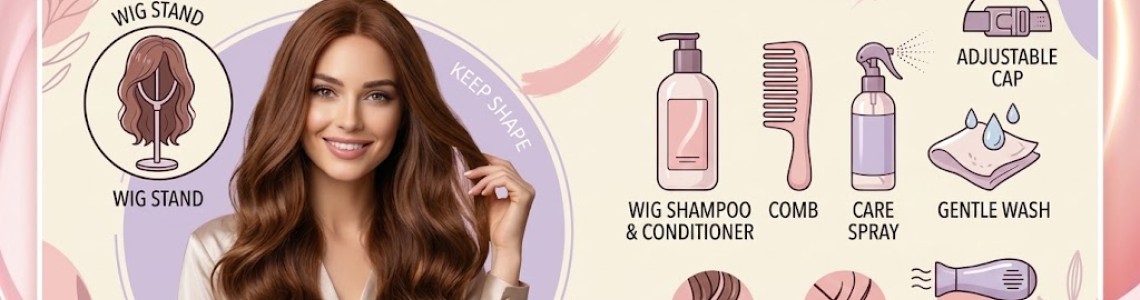
However, friends who are new to wigs often encounter various troubles: "Why do I look like a big-headed doll when wearing a wig?" "Does a brand new wig need to be washed?" "What should I do if my wig gets tangled or sheds hair?"
To help everyone extend the lifespan of their wigs and wear them with a natural, sophisticated look, this article provides a one-stop, professional, and highly actionable full-lifecycle care guide for wigs, covering out-of-the-box treatment, daily washing and care, long-term storage, and common troubleshooting (wearing, hair loss, heat styling, and dyeing).
I. Unboxing a New Wig: The First Step, Avoid Blind Washing!
Many friends who receive a new wig habitually want to wash it first before wearing it. This is a very common misconception!
1. New Wigs Do Not Need to Be Washed
Reasoning: Brand new wigs have already undergone strict cleaning, styling, and setting processes during manufacturing. The material of the wig itself (whether high-temperature synthetic fiber or human hair) is extremely clean and in its optimal shape before being worn. Washing it directly is not only a waste of time, but it may also damage the hair structure set at the factory.
Correct Operation:
Carefully take the wig out of the packaging bag or dust net.
Hold the inner cap of the wig with your hand and gently shake it a few times to let the compressed hair fibers naturally spring open.
Use your fingers to gently comb through the floating hair on the surface (unfixed stray hair left over from the manufacturing process).
Once smoothed out, you can wear it directly!
II. Scientific Washing and Daily Maintenance Cycle for Wigs
Wigs do not need to be washed every day like natural hair; excessive washing will actually shorten the elasticity and luster of the hair fibers.
1. Washing Frequency Control
Frequent Daily Wearers: Recommended to wash every 7 to 15 days.
Occasional Wearers (e.g., Cosplay or specific gatherings): Wash after wearing 3 to 5 times or when there is a noticeable odor or dirt.
2. Standard 5-Step Washing Method (Beginner-Friendly Steps)
⚠️ Core Points: Wigs are extremely averse to scrubbing and violent pulling. The core of washing lies in "soaking" and "pressing."
| Step | Operation Stage | Core Actions and Precautions |
|---|---|---|
| Step 1: Water Temperature & Shampoo Selection | Prepare Warm Water | Prepare a basin of warm water (avoid using overly hot water), add a small amount of your usual shampoo, and mix well until it lathers. |
| Step 2: Gentle Soaking | Soak for 2 Minutes | Turn the wig inside out or submerge it directly into the warm water containing shampoo, and let it soak for about 2 minutes. |
| Step 3: Gentle Pressing | Lightly Press and Pat | Do not rub it like clothes! Simply use your hand to gently press and pat 2-3 times to remove dust and oil adhering between the hair fibers. |
| Step 4: Clean Water Rinse | Thorough Rinsing | Take out the wig, switch to clean water, and rinse repeatedly until all shampoo residue is completely washed away. |
| Step 5: Natural Air Drying | No Blow-Drying/Sun Exposure | Gently squeeze out excess water with a dry towel, do not twist or wring hard. Afterward, place it in a ventilated and cool place to air dry naturally, strictly avoiding high-power hair dryers or strong direct sunlight. |
III. Wig Storage: How to Prevent Deformation and Tangling?
The storage method of a wig directly determines its smoothness and shape for the next time you wear it. Depending on the frequency of use, we need to adopt different storage strategies.
              ┌── Frequent Wear ───► Place directly on a dedicated wig stand (maintains ventilation and shape)
Wig Storage ──┤
              └── Long-term Storage ─► Comb smooth & spray care liquid ───► Stuff with moisture-proof paper ───► Put on black net ───► Pack in a bag & seal
1. Daily Storage for Frequent Wearers
If you wear a wig every day, a dedicated wig stand is the best choice.
Hang the combed and smooth wig directly on the stand.
This not only maintains the three-dimensional shape of the wig cap but also keeps it ventilated, preventing sweat residue from producing odors.
2. Dust-Proof and Moisture-Proof Storage for Long-Term Non-Use
If the wig needs to be idle for a long time, triple protection against dust, moisture, and deformation must be ensured:
Combing and Nourishing: First, comb the wig smooth, and evenly spray a layer of dedicated wig care liquid onto the hair fibers.
Shaping Support: Stuff the white moisture-proof paper (paper ball) inside the mesh cap of the wig. This not only absorbs minor moisture but also supports the cap to prevent collapsing and deformation.
Cover with Dust Net: Use the black dust net that came with the wig to wrap it back up.
Sealed Bag Storage: Finally, put it into a sealed bag or storage box, and store it in a dry, dark wardrobe.
IV. Frequently Asked Questions (FAQ) In-Depth Analysis and Solutions
During the process of using wigs, everyone often encounters various practical difficulties. We have provided the most professional troubleshooting and solution guide for the top 5 most common tricky issues:
Q1: Why does the wig I wear look different from the model pictures?
This is the disappointment gap most beginners experience.
Reasoning:
Individual Differences: Everyone's face shape, head shape, facial proportions, temperament, and overall clothing matching are completely different.
Insufficient Styling Skills: Model pictures are often professionally styled by professionals (such as trimming bangs, backcombing for volume, styling spray, etc.). Wigs are not "perfect right out of the box"—they require strong acquired styling skills.
Solutions:
Practice More: When you first get your wig, try different wearing positions and parting angles in front of the mirror to find the wearing method that best suits your face shape.
Personalized Secondary Trimming: It is recommended that after getting the wig, you can take it to a familiar hairstylist, wear it, and fine-tune and trim the bangs and sideburns according to your face shape.
Q2: Is severe hair shedding a sign of quality issues?
Reasoning:
Natural Shedding of Floating Hair: Wigs are mainly woven stitch by stitch on high-speed machines, and most production processes require manual operation. Therefore, there will inevitably be a small amount of "floating hair" in the hair mesh gaps that are not completely secured. A small amount of hair loss in the early stage is a normal physical phenomenon.
Violent Combing: Forcing a pull when encountering tangles will cause securely attached hair fibers to break or pull out.
Solutions:
Handle Tangles Correctly: Never use brute force to comb violently! No matter how high-end or expensive a wig is, it cannot withstand violent pulling.
Use Care Liquid: When tangled, first spray with dedicated wig care liquid, and gently comb from the ends upwards, section by section.
Stubborn Tangle Cutting Method: If you encounter stubborn dead knots that cannot be untied, carefully cut off the tangled parts with small scissors. This will not affect the overall appearance and hair volume of the wig at all.
Q3: Does wearing a wig make my head look big, or does it feel insecure?
Causes and Countermeasures for Looking Big-Headed:
Reason: Your own natural hair is not flattened, or the wig cap is not adjusted to the right size.
Countermeasure: Be sure to flatten and tightly wrap your natural hair with a hair net before wearing; adjust the wig position after putting it on to avoid stacking the wig net in one area of the head.
Causes and Countermeasures for Feeling Insecure:
Reason: Head circumference size mismatch.
Countermeasure: The back half of the interior of modern wigs is designed with adjustable buckles (adjustment loops/hooks). You can hook the buckles into different tooth slots according to your own head circumference until you feel a snug fit without obvious pressure.
Q4: Does the wig hair texture look unnatural? Is the hair volume too much or too little?
Industry Hair Volume Standards:
The amount of wig hair volume is closely related to the season (thinner in summer, thicker in winter), style, and hair material. Excellent wig brands usually add an extra 10% - 20% of hair volume on the premise of following industry standards to achieve the best balance between naturalness, fluffiness, and durability.
Tips for Managing Hair Texture:
- If you feel the wig is overly shiny and dazzling (lacking the natural matte look of real hair), you can evenly spray a little dry shampoo or a small amount of translucent powder, which will immediately present an advanced matte texture.
Q5: Can wigs be permed, straightened, or dyed?
This is the most critical technical issue in post-wig styling, and improper handling will directly ruin the wig!
1. Regarding Perming / Straightening (Heat Styling)
Hair Material Requirement: Must be high-temperature synthetic fiber wig material.
Temperature Control: Curling wands or flat irons can be used for styling, but be sure to keep the temperature below 120°C (it is recommended to keep it around several tens to 100°C).
Warning: Excessive temperatures will cause the high-temperature fiber material to melt, scorch, or lose elasticity, causing irreversible permanent damage to the hair fibers.
2. Regarding Dyeing
Clear Conclusion: It is strongly not recommended to dye wigs yourself!
Two Fatal Reasons:
Terrible Color Locking: Artificial wig fibers lack the cuticle structure of human hair, making it impossible to lock in hair dye pigments. Color fades extremely quickly after dyeing, and the colors easily become patchy.
Unwashable Mesh Contamination: Hair dye cream very easily penetrates and stains the inner mesh at the bottom of the wig. Once the hair dye stains the inner net, it is completely impossible to wash out, which not only affects appearance but may also irritate the scalp.
V. Summary and Core Wig Care Mantra
Maintaining a high-quality wig can not only save you a lot of styling budget but also keep you confident and beautiful every time you go out.
Finally, here is a summary of the minimalist mantra for daily wig care:
Shake new hair when it arrives, skip the wash and step right out;
Soak in warm water for two minutes mid-month, press gently and let dry naturally;
Never pull hard on tangles, use care spray and small scissors;
Keep heat styling under one-twenty, and never try to dye it;
Stuff with moisture paper and net in bag, stay stunning like new for long!